
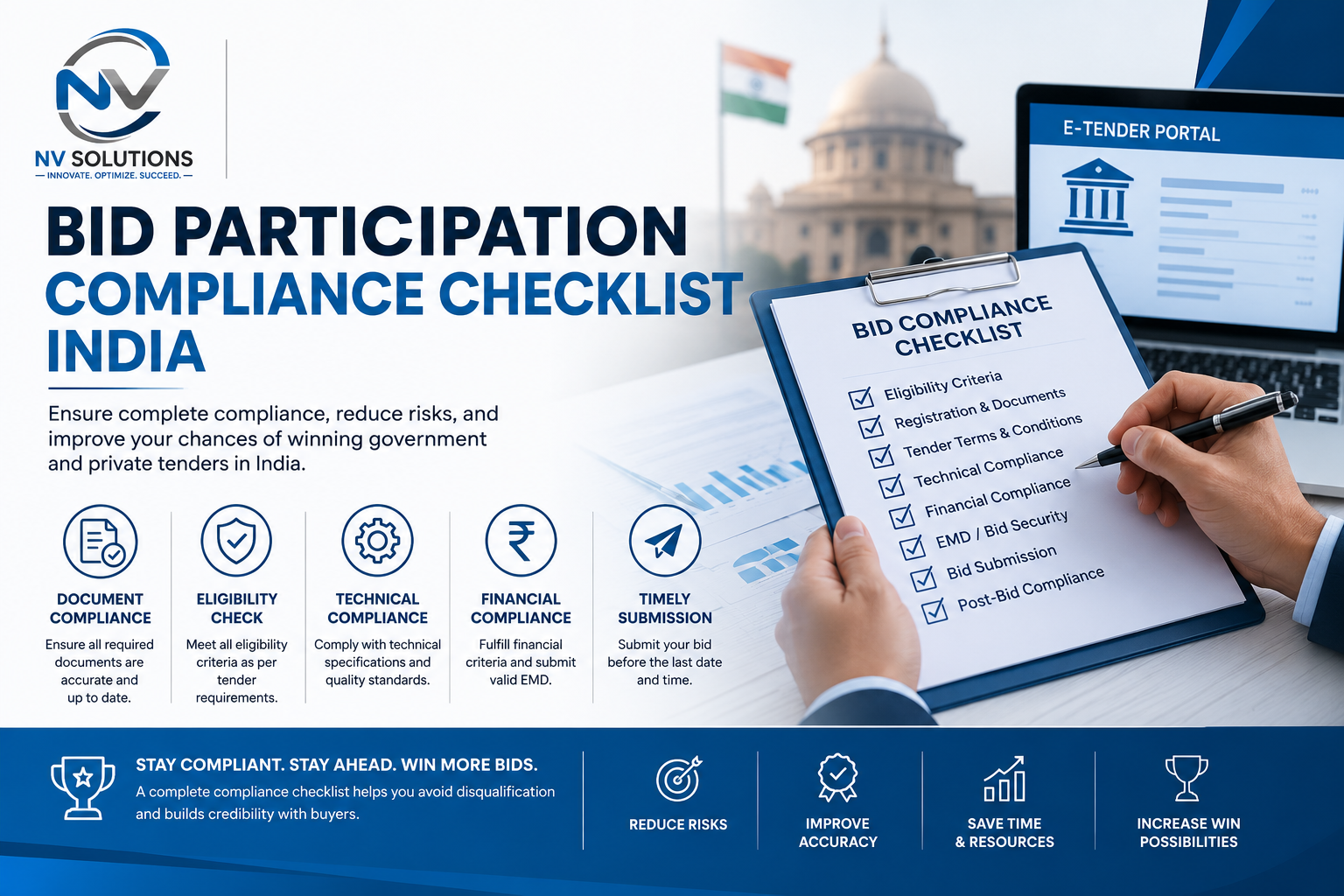
By submitting a tender to the government or a private organization in India, businesses have the opportunity to earn millions of Rupees through contracts; however, many tenders are rejected because the documents are not complete, the regulations have not been followed, or the business does not meet the criteria as defined in the tender. Using a comprehensive compliance checklist as part of the bid process will help your organisation avoid disqualification by ensuring that you meet all of the tender requirements so your bid has the best chance to win the contract. Tender Support Services
This document identifies the key requirements that every bidder should review prior to submitting a tender in India.
To be eligible for consideration as a bidder (i.e., bidder's being eligible must meet the conditions) and to qualify (i.e., qualifying must complete the qualification requirements) as a bidder (i.e., must complete the required number of bidders), to execute an agreed upon Project that meets the buying requirements of compliant bidders is through your compliance, based on all Consultational, Financial, Technical, and Procedural requirements that are indicated as part of the Tendering process.
Compliance will be important to bidders due to Government and Private Sector obligations as they bid for Tender(s), Public Sector Undertaking (PSU) Contract(s), and/or Private Tender(s).
Using a compliance checklist guarantees businesses will be able to:
Any minor issue, such as an expired certificate or incorrect financial document, can cause the business to be disqualified from bidding.
Make sure that your organisation is properly registered and all of the following documents are up to date;
A lot of tenders will have requirements on finances. Verify:
The majority of tenders in India are obligatory conditions to comply tax regulations. Have the following materials on hand:
The majority of tenders will ask to see the technical ability. Check for:
Each tender involves its own qualifications and documentation needed. Common documents include:
Failure to complete a required form will lead to the form to be rejected immediately.
Before submission:
At the last minute technical problems can occur which means it is not possible to submit successfully.
Be sure to read all the pre-made legal statements through carefully, such as:
The mistakes could result in the cancellation of bids or blacklisting in the future.
Any assignments handed in late won't receive any credit.
If you get your bids in early, and well in advance of the deadlines, there will be minimal technical risks.
Be sure to do a detailed review before you click on the last of the submit buttons:
The final audit assists in finding and fixes errors prior to submitting.
Businesses often lose opportunities because of:
Implementing a structured compliance process significantly reduces these risks.
Comprehensive Bid Participation Compliance Checklist plays a pivotal role in successful tender participation in India. Both application and business qualification, financial conditions, technical ability and legal declarations must be carefully checked before they are submitted.
By taking a systematic compliance approach, organisations can minimise the risk of being rejected and enhance their reputation and competitiveness in the tendering process. Compliance preparation can be a game-changer between being rejected and a winning contract.
Bid participation compliance refers to fulfilling all eligibility, documentation, financial, technical, and legal requirements specified in a tender before submitting a bid.
Common reasons include missing documents, non-compliance with eligibility criteria, incorrect financial information, expired certificates, and late submission.
In most cases, GST registration is required. However, specific exemptions may apply depending on the tender category and bidder type.
Typical documents include PAN, GST certificate, company registration certificate, financial statements, work experience certificates, and declarations required by the tender authority.
EMD is a security deposit submitted by bidders to demonstrate seriousness and commitment toward the tender process. Some MSMEs may qualify for exemptions.
Businesses should maintain updated documents, monitor eligibility requirements, conduct internal compliance reviews, and submit bids well before deadlines to avoid errors and disqualification.